
2026 Project Achievement Award Recipient
This award is presented to an engineering or geoscience project that contributes new technologies, processes, or innovations for the improvement of society.
The Town of Sundre Wastewater Treatment Project
Reimagining Wastewater Treatment for Small Communities
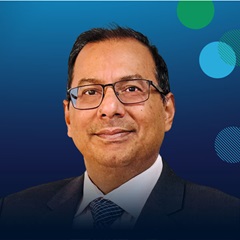
Facing rapidly increasing costs and stricter ammonia regulations, the Town of Sundre, Alberta, re-envisioned its wastewater treatment strategy in 2025. Rather than expanding its aging lagoon system, Sundre became the first municipality in Alberta to deploy full-scale electroflocculation—an energy-efficient process that uses minimal chemicals to remove ammonia, nutrients, and fine solids from wastewater. The approach significantly reduced sludge production and land needs, avoiding an estimated $15 to $30 million in capital and operating costs compared to a traditional lagoon expansion.
The success of this project has province-wide potential as many small Alberta communities depend on lagoon-based wastewater systems that struggle to meet modern Canadian ammonia guidelines. Sundre’s situation carried additional responsibility as the first community to release treated wastewater into the Red Deer River, a major water source relied upon by more than 300,000 Albertans downstream.
Implemented under Alberta’s first regulatory framework that emphasizes treatment performance rather than prescribing specific technologies, the Sundre Wastewater Treatment plant project demonstrates how innovation can be applied responsibly in municipal infrastructure. This outcomes-based approach addressed long-standing barriers, such as cost and risk, that have often prevented communities from adopting newer treatment methods. Now entering its closing and transition phase, the project has been independently validated to consistently meet strict water-quality limits while delivering reliable treatment with a smaller environmental footprint than traditional lagoon expansions or mechanical plants.
Equally important, the project demonstrates fiscal and operational sustainability. Its compact, scalable design allows capacity to expand incrementally as the community grows, avoiding overbuilding and long-term liabilities.
“This project illustrates how outcomes-based expectations and risk-informed engineering, applied within regulatory frameworks, can responsibly enable innovation in municipal infrastructure,” says professional engineer and project lead Rasel Hossain. “It demonstrates how engineering leadership can protect environmental and public health outcomes while improving long-term community resilience.”
Beyond Sundre, the project stands as a model for municipalities across Alberta and Canada, highlighting how community-led innovation can overcome longstanding infrastructure challenges and deliver measurable environmental and economic benefits. By challenging conventional approaches, it sets a new benchmark for sustainable municipal infrastructure that redefines what small communities can achieve.
Key contributors to the project include (in alphabetical order):
- Connie Anderson
- Darrell Behan
- Dr. Stephen Craik, P.Eng.
- Rasel Hossain, P.Eng.
- Gonzales Lee
- Jennifer Magnus, P.Eng.
- Linda Nelson, CLGM, CTAJ, EMR
- Andrew Tenham, P.Eng.