
Clarified Standards Support Safety in Truss Design
In Alberta, the safety of our buildings is a shared responsibility, built upon rigorous standards and collaborative oversight. The Association of Professional Engineers and Geoscientists of Alberta (APEGA) fulfils our part in this system by serving the public interest—a privilege we have upheld since 1920.
In our capacity as a regulator of the engineering profession, APEGA identified questions on how the National Building Code – 2023 Alberta Edition (NBC(AE)) was being applied. As part of our responsibility to support public safety and consistent regulatory practice, we asked the Government of Alberta to clarify when licensed engineering professionals should be involved.
In response, the government has provided direction on how the NBC(AE) applies in this area of construction work. This guidance takes effect March 1, 2026, marking the end of the one-year grace period following its 2025 announcement.
All registrants working in this discipline should be aware of the enhanced standards issued through the new STANDATA by the government.
Not just a regulatory checkbox
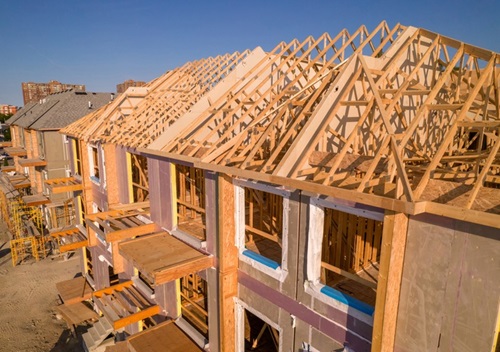
Roof systems and their component trusses are typically designed using specialized software that handles the engineering calculations. Over time, residential construction has become more customized and complex, often exceeding the engineering exemptions permitted under Part 9 of the NBC(AE). As a result, some truss designs now exceed the limits originally anticipated for small-scale construction.
To verify the appropriate use of design software and accountability for the resulting structures, truss designs must be reviewed by a licensed engineering professional. Professional involvement confirms that design outputs are properly evaluated and responsibility for structural safety is clearly established.
The STANDATA make it clear that licensed engineering professionals must be involved in the design of truss components and the structural systems they form that work together to support a roof.
Engineering oversight is not just a regulatory checkbox—it is a safeguard that protects homeowners from structural failures, costly repairs, and potential harm. Licensed engineering professionals engaged in delivering this scope of work should ensure they are aware of the requirements under the STANDATA and the interplay of these requirements with APEGA’s Code of Ethics and practice standards.
Specific topics of note are scope of responsibility, authentication, and validation as outlined in APEGA’s Ethical Practice guideline, as well as obligations for thorough review prior to authentication and reliance on work product of non-professionals, as described in APEGA’s Relying on the Work of Others and Outsourcing practice standard.
If a licensed professional is not capturing the entire scope required by the STANDATA and APEGA’s practice standards, this should be noted so the reviewing safety codes officer is aware of the need for further professional involvement. Practitioners who have questions about the application are welcome to reach out to APEGA’s Professional Practice department at [email protected].
Collaborative work continues
We recognize these clarifications affect the homebuilding industry, and we appreciate the conversations they have sparked. As Alberta’s engineering regulator, APEGA’s role is to ensure engineering practices align with legislative requirements and to bring forward any questions that arise. Accordingly, we have collaborated with government and industry representatives to better understand the intent of the NBC(AE) as building practices and technologies have evolved. We appreciate the Government of Alberta’s clarification of the standard and its importance in supporting consistent application across the province.
APEGA will continue to work alongside industry stakeholders, government, and the public to ensure accountability in engineering and geoscience practices remains strong, clear, and consistent.