Queue & A
True or False?
Rocks are divided into three different categories.
-
check_circle Yeah!
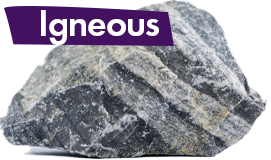
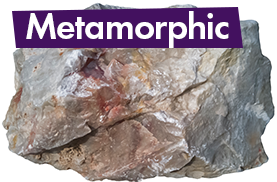
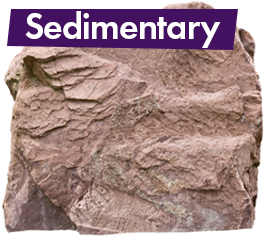
There are three categories of rocks: igneous, metamorphic, and sedimentary.
-
cancel Nope!
There are three categories of rocks: igneous, metamorphic, and sedimentary.
Still curious? Get another question
Queue & A
True or False?
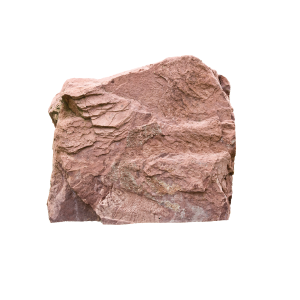
Sandstone is a rock commonly found in Alberta.
-
check_circle Yeah!
Sandstone is one of many rock types you can find in Alberta.
-
cancel Nope!
Sandstone is one of many rock types you can find in Alberta.
Still curious? Get another question
Queue & A
True or False?
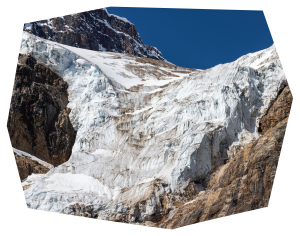
Alberta was once covered by glacial ice.
-
check_circle Yeah!
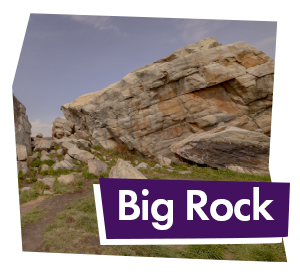
The Big Rock near Okotoks, Alberta, is evidence of this.
The Big Rock is a glacial erratic, which means it is a glacially deposited rock that is different from the type of rock native to the area in which it rests.
-
cancel Nope!
The Big Rock near Okotoks, Alberta, is evidence of this.
The Big Rock is a glacial erratic, which means it is a glacially deposited rock that is different from the type of rock native to the area in which it rests.
Still curious? Get another question
Queue & A
True or False?
There is no metal that can be cut with a knife.
-
cancel Nope!
Lithium is soft enough that it can be cut with a regular knife!
-
check_circle Yeah!
Lithium is soft enough that it can be cut with a regular knife!
Still curious? Get another question
Queue & A
True or False?
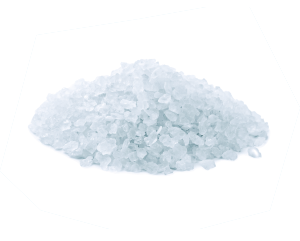
Alberta is the largest producer of salt in Canada.
-
cancel Nope!
Alberta is the second-largest producer of salt in Canada.
Saskatchewan is the largest salt producer in Canada.
-
check_circle Yeah!
Alberta is the second-largest producer of salt in Canada.
Saskatchewan is the largest salt producer in Canada.
Still curious? Get another question
Queue & A
True or False?
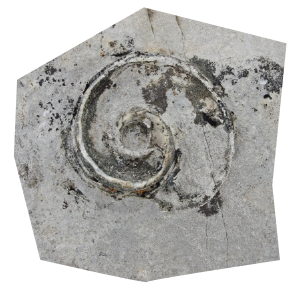
Cephalopod fossils are not found in Alberta.
-
cancel Nope!
You can find cephalopod fossils in Alberta.
Check out Alberta Fossils to see examples of cephalopods and other fossils found right here in Alberta
-
check_circle Yeah!
You can find cephalopod fossils in Alberta.
Check out Alberta Fossils to see examples of cephalopods and other fossils found right here in Alberta
Still curious? Get another question
Queue & A
What is a geoscientist?
-
check_circle Yeah!
A geoscientist is a scientist who knows about and studies the different parts of the Earth.
The geo in geoscientist means “related to the Earth,” so geoscience is the study of Earth, but a geoscientist is a scientist who knows about and studies the different parts of the Earth. There are different types of geoscientists, like geologists, geophysicists, and geochemists, and they all study different parts of the Earth, such as rock formations, how the inside of the Earth works and looks, and how chemical elements move through soil and water.
-
cancel Nope!
A geoscientist is a scientist who knows about and studies the different parts of the Earth.
The geo in geoscientist means “related to the Earth,” so geoscience is the study of Earth, but a geoscientist is a scientist who knows about and studies the different parts of the Earth. There are different types of geoscientists, like geologists, geophysicists, and geochemists, and they all study different parts of the Earth, such as rock formations, how the inside of the Earth works and looks, and how chemical elements move through soil and water.
-
cancel Nope!
A geoscientist is a scientist who knows about and studies the different parts of the Earth.
The geo in geoscientist means “related to the Earth,” so geoscience is the study of Earth, but a geoscientist is a scientist who knows about and studies the different parts of the Earth. There are different types of geoscientists, like geologists, geophysicists, and geochemists, and they all study different parts of the Earth, such as rock formations, how the inside of the Earth works and looks, and how chemical elements move through soil and water.
Still curious? Get another question
Queue & A
True or False?
If you enjoy both the outdoors and working with computers and technology, a career in geoscience could be for you.
-
check_circle Yeah!
You could be working outside in various sites one day, like in the mountains, in cities, or even on a boat out on the water—and the next day you could be on a computer analyzing data and creating code.
So, if you like variety, being outdoors, and working with computers, then a career in geoscience could be for you!
-
cancel Nope!
You could be working outside in various sites one day, like in the mountains, in cities, or even on a boat out on the water—and the next day you could be on a computer analyzing data and creating code.
So, if you like variety, being outdoors, and working with computers, then a career in geoscience could be for you!
Still curious? Get another question
Queue & A
True or False?
The APEGA Rock & Fossil Clinic happens once a year.
-
check_circle Yeah!
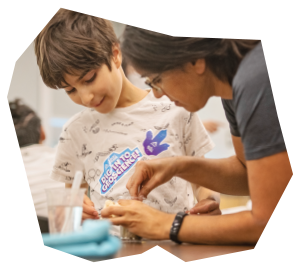
The APEGA Rock & Fossil Clinic occurs once a year in the fall. It has been held for more than 30 years!
It is our main geoscience-focused event, and we’re happy to have you all joining us for our 31st year!
-
cancel Nope!
The APEGA Rock & Fossil Clinic occurs once a year in the fall. It has been held for more than 30 years!
It is our main geoscience-focused event, and we’re happy to have you all joining us for our 31st year!
Still curious? Get another question
Queue & A
Matching game
Match the landform or place with the closest Alberta town.
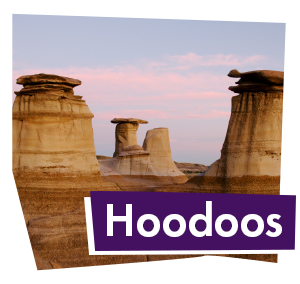
The Hoodoos are closest to:
-
cancel Nope!
-
cancel Nope!
-
cancel Nope!
-
check_circle Yeah!
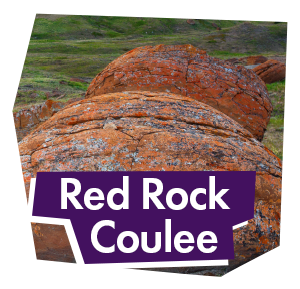
Red Rock Coulee is closest to:
-
cancel Nope!
-
cancel Nope!
-
check_circle Yeah!
-
cancel Nope!
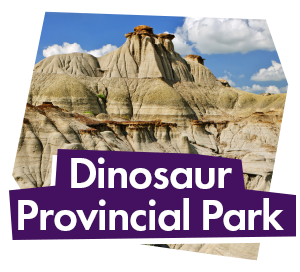
Dinosaur Provincial Park is closest to:
-
check_circle Yeah!
-
cancel Nope!
-
cancel Nope!
-
cancel Nope!
Big Rock is closest to:
-
cancel Nope!
-
check_circle Yeah!
-
cancel Nope!
-
cancel Nope!